Insurance Documents to Keep Ready During a Financial Emergency
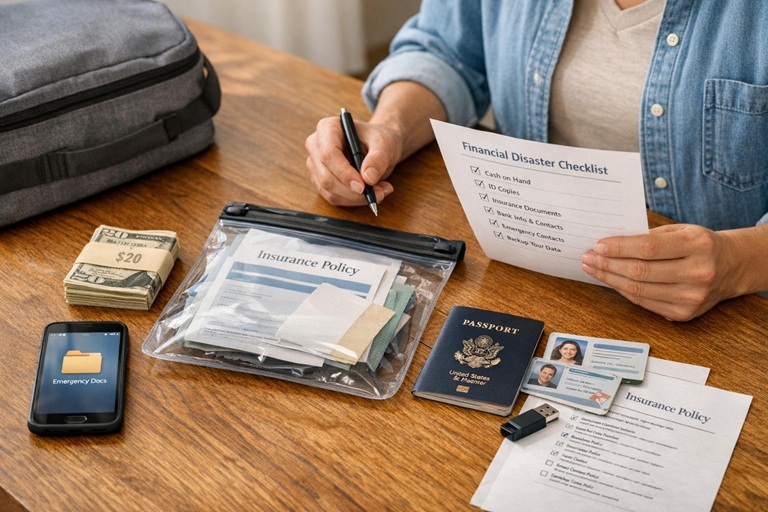
Nobody plans for the phone call from the hospital. Or the accident on the highway, the flooded ground floor, the sudden death of a parent. Emergencies show up without warning, and in those first few hours, most people discover something uncomfortable: they have no idea where their insurance papers are.
So the search begins. Old email threads, a drawer full of envelopes, a folder that may or may not be at home. Meanwhile, the hospital wants a policy number, and you are trying to hold it together.
It doesn’t have to go this way. A little preparation in calm times means a claim that could have dragged for weeks moves in days, and you get to focus on the crisis instead of the paperwork. In 2026, being prepared also no longer means maintaining a thick physical file. An insurance app can hold nearly everything on your phone, ready when you need it.
Why This Matters More Than People Think
Insurance pays out only when you file a valid claim, and a valid claim needs specific documents. Miss one and the claim sits. Submit everything promptly, and it moves.
The catch is timing. You will need these papers at the exact moment you are least able to go looking for them, sitting in a hospital corridor, dealing with a loss, or standing in a damaged home. Scattered documents turn a hard day into a harder one. Organised ones let the policy do what you paid it to do.
The Core Set: Keep These for Every Policy
Whatever type of cover you hold, a basic set of documents applies to almost every claim.
Start with the policy document. It carries your policy number, the coverage, the terms and exclusions, and the insurer’s contact details. Every claim begins with it. Separately, keep the policy number and the insurer’s claim helpline somewhere you can reach in seconds, because that one number is often all you need to get a claim started.
Premium payment receipts matter too. They prove the policy is active, and an insurer won’t pay on a lapsed policy. Add your KYC documents (Aadhaar, PAN, address proof) to verify the claimant. And for life and term plans, keep your nominee’s details handy, since the nominee is the person who actually receives the payout.
Have this core set ready for each policy, and you can begin any claim without delay.
What Each Type of Claim Asks For
On top of the core set, every category of insurance has its own supporting papers. Knowing them in advance saves you from discovering a requirement halfway through.
- Health insurance: Expect to need hospital bills and receipts, the discharge summary, prescriptions, doctor’s reports, and diagnostic results. For a cashless claim, the hospital will also process a pre-authorisation form with your insurer. Accident-related treatment may need extra documentation.
- Motor insurance: Keep the vehicle’s registration certificate, your driving licence, and the policy document. For theft or a serious accident, you’ll need an FIR or police report. Photos of the damage, taken on the spot, help a lot.
- Term or life insurance: The nominee will need the policy document, the death certificate, their own ID and address proof, and the insurer’s claim form. Depending on the circumstances, the insurer may ask for more.
- Home insurance: Have the policy, proof of ownership, photos or other evidence of the damage, and any official report where relevant, such as from the fire brigade or police.
Once you know the list for your policies, an emergency becomes a checklist to work through, not a treasure hunt.
Where an Insurance App Helps
A physical folder has an obvious flaw. It stays at home, and emergencies don’t always happen at home. It can also get lost, damaged, or be the one thing you forget during a move.
An insurance app solves most of that. Your policies sit in one place, stored digitally and reachable from your phone wherever you are. You can see policy numbers and coverage at a glance, get to the insurer’s claim process directly, and often upload claim documents from the same app. If you hold several policies (health, motor, term, home), seeing them all together instead of across four different inboxes makes a real difference on a bad day.
The Bajaj Finserv app, which works as an insurance marketplace for plans from partner insurers, lets you keep and manage policies bought through it in one spot, view their details, and access the claims process. The key information travels with you.
One practical tip: don’t rely on a single copy. Keep your documents in the app and back them up in a secure cloud folder or your email as well.
Get Organised While Things Are Calm
Readiness is built on an ordinary Tuesday, not in the middle of a crisis. Set aside an hour and do this:
- Collect every policy you hold and confirm you have the full document, policy number, and insurer contact for each.
- Store digital copies in your insurance app and in one backup location.
- File your KYC documents and nominee details alongside each policy.
- Check that every premium is paid and the policy is active.
- Tell the people who might have to claim for you (your spouse, a parent, your nominee) what policies you hold and where to find the papers.
That fifth step gets skipped more than any other, and it may be the most important. A nominee who doesn’t know a policy exists can’t claim on it. Plenty of payouts go unclaimed in India every year for exactly this reason.
Revisit the whole set once a year, and whenever you renew or buy a new policy, so nothing goes stale.
A Quick Readiness Check
You’re in good shape if you can say yes to all of these:
- Every policy is stored digitally and backed up somewhere else
- Policy numbers and claim helplines take seconds to find
- KYC and nominee details sit with each policy
- Premiums are current, and you can prove it
- You know which extra documents each of your claims would need
- The people close to you know what you hold and how to reach it
Get there once, check in occasionally, and a future emergency won’t come with a paperwork crisis attached.
In Short
Insurance is only as good as your ability to claim on it. And that ability depends on having the right documents in hand at the worst possible moment.
Keep the core set ready for every policy: the document, the number, premium proof, KYC, and nominee details. Learn what extra papers your health, motor, term, or home claims would need. Store it all in an insurance app like Bajaj Finserv so it’s on your phone, not in a drawer, and keep a backup.
Most of all, make sure the people who matter know where to look. Do that, and your insurance stops being a promise filed away somewhere and becomes help you can actually reach when you need it.