How large investment activity shapes momentum in public sector stocks?
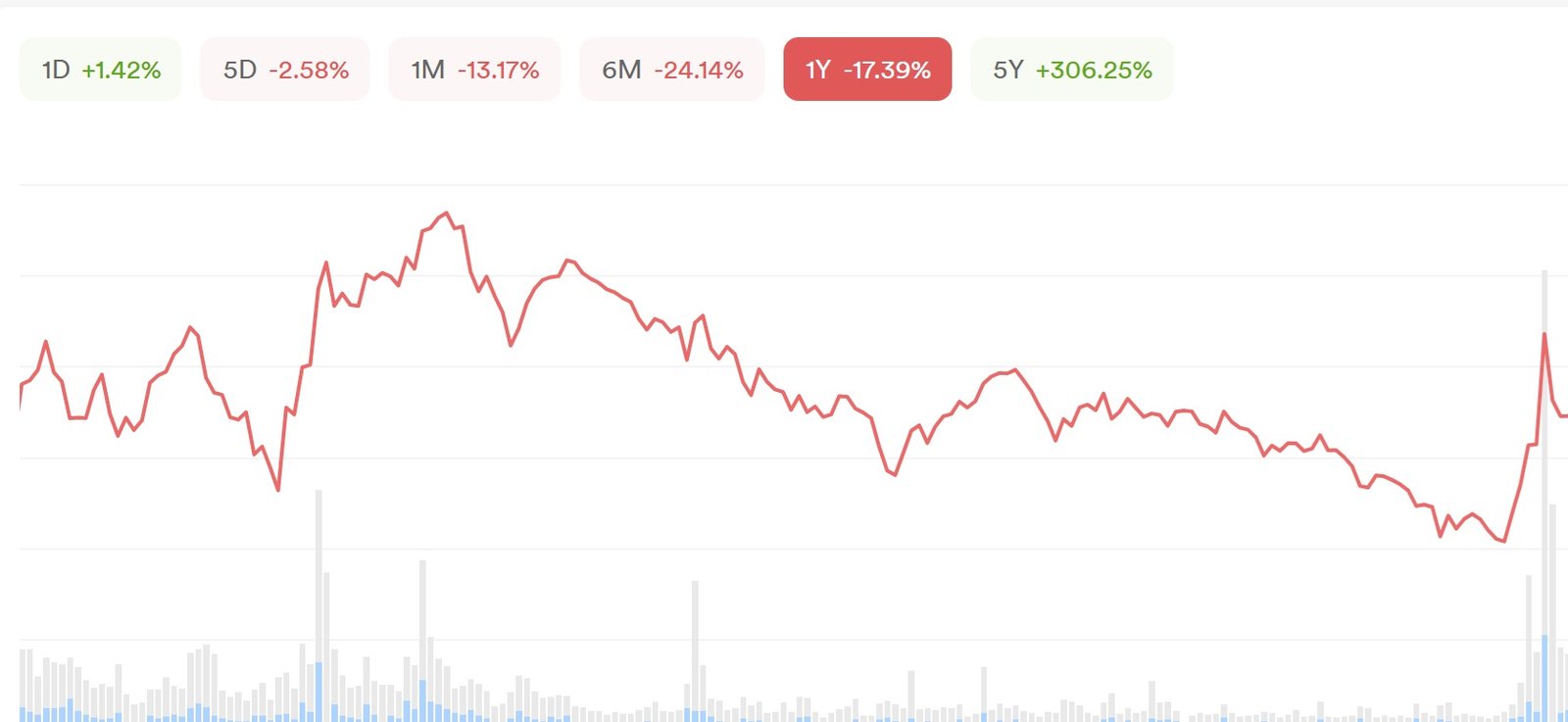
When large investors start to accumulate or reduce their position, it affects the share price. You can clearly see the sharp movements when large investors are active. These investors include institutional players such as mutual funds, insurance companies, government entities, and FIIs. They manage a huge amount of capital, hence their buying and selling activity can strongly influence market sentiments and price momentum.
By analyzing the impacts of such large investments on the share prices, you can identify the early momentum signal.
Understanding public sector stocks
Public sector stocks represent companies where the government holds a majority stake. These companies operate in key sectors such as banking, energy, infrastructure, and defence.
It is observed that the public sector companies usually trade differently from the private sector companies. These companies are highly influenced by the government policies, economic reforms and large institutional investments. As public sector companies have high market capitalisation and operate in key areas, they carry strategic importance. Due to this, large institutions usually have an attraction towards these companies.
When institutional investors show interest in public sector stocks, the resulting capital inflow can significantly impact their price trends. Traders observe the changes in the public sector companies’ share prices, such as the IRFC share price, which can help traders understand how institutional investments influence momentum in public sector stocks.
What is a large investment activity?
When there is a huge buying or selling by investors who control significant funds, it refers to large investment activity. These investors usually include:
- Mutual funds
- Pension funds
- Insurance companies
- Foreign institutional investors (FIIs)
- Government investment bodies
Due to the huge capital, such institutions cannot buy or sell their entire position in a single trade without affecting the market. Hence, usually they accumulate or distribute their shares gradually over multiple sessions. This process generally creates visible patterns in the stock charts. Traders usually track FII DII data NSE to understand which sectors may attract strong investment activity.
How large investments create momentum
When there is strong buying or selling pressure, the stock starts to move in a particular direction, creating momentum. Large investment activity usually acts as a key driver for this momentum. Here is how large investments create momentum.
- Increased buying pressure
The demand increases when institutional investors start to accumulate shares of a public sector company. The increased demand pushes the stock price upward. As the buying activity of large institutions may last for several days or weeks, it creates a steady upward trend.
- Volume expansion
You can see a noticeable volume increase during trading when the large investors step in. Higher volume indicates strong participation in the stock. It confirms that the price movement is supported by significant market activity.
- Breakouts from key levels
Breakouts from important resistance or support levels are usually accompanied by institutional activity. When a stock breaks a major resistance level with strong buying interest, it attracts additional traders and investors. This can trigger a new phase of bullish momentum.
- Improved market sentiments
Large investment activity improves overall market sentiment towards a stock. Market players frequently take the accumulation of shares by institutional investors as a sign that the company is doing well.
Why do public sector stocks react strongly
The following are the key reasons why public sector companies react strongly to large investments:
- Usually, these companies trade at lower valuations compared to public sector companies. When institutional investors begin allocating capital to them, the re-rating process can lead to significant price appreciation.
- As public sector companies are directly affected by government policies and reforms, they increase investors’ confidence in these companies. When institutions anticipate such developments, they may start building positions early, which creates momentum in stock prices.
- Many public sector stocks have relatively lower participation from retail investors compared to large private sector companies. As a result, institutional buying can have a more visible impact on price trends.
Conclusion
Heavy buying activity has a strong impact on momentum in public sector shares. When institutions start piling into a stock, the resulting buying action can move the price trend, volume, and market sentiment. By analysing signals from such stocks, traders can benefit from these emerging opportunities.
Get started with IronFX using the ironfx no deposit bonus and begin trading without risking your own funds.